



Parents and teachers often sense when a child is working hard but not making the progress they hoped for with reading. You might hear your child guessing at words, avoiding books, or losing confidence despite regular practice. It can feel confusing, especially when you are already trying so much.
Over the past decade, many educators have turned to something called the Science of Reading to better understand how children learn to read. It isn’t a trend or a new program. It’s a body of research that explains what truly supports strong literacy development.
This guide explores the best science of reading programs and approaches for literacy, helping you understand what matters, what to look for, and how to choose support that genuinely meets your child’s needs.
Before We Dive Into
-
The Science of Reading is based on decades of research showing that children need clear, structured teaching to learn to read confidently.
-
Strong literacy programs focus on phonics, fluency, vocabulary, and comprehension rather than encouraging children to guess words.
-
Not all programs that use the label “Science of Reading” follow the research closely, so it helps to look at how teaching actually happens.
-
The best science of reading programs for literacy balance skill-building with emotional safety, helping children feel supported as they learn.
-
Children make stronger progress when parents and teachers work together with shared understanding and consistent routines.
-
Programs like FunFox Readers Club combine research-informed instruction with small-group support, helping children grow in both skill and confidence.
What Is the Science of Reading?

The Science of Reading refers to decades of research from psychology, neuroscience, and education that explains how children learn to read and write. It shows that literacy develops through specific skills that need to be taught clearly and in a structured way.
Children do not naturally pick up reading in the same way they learn to speak. Most need careful instruction in how sounds connect to letters, how words work, and how meaning builds across sentences and stories.
Strong Science of Reading approaches usually include:
-
Phonological awareness (hearing sounds in words)
-
Phonics (linking sounds to letters)
-
Fluency (reading smoothly with meaning)
-
Vocabulary (understanding word meanings)
-
Comprehension (making sense of what is read)
Programs built on this research focus on clarity, structure, and steady progress rather than guesswork or memorization.
Why the Science of Reading Is Suddenly Everywhere
Many parents and teachers feel like the term “Science of Reading” appeared overnight. You might be hearing it in school newsletters, on social media, or in conversations with other families, often alongside questions about why reading instruction is changing.
This growing attention is happening for real, practical reasons:
-
More families are noticing gaps in reading progress: Parents are recognizing that some children work very hard yet still struggle with decoding, spelling, or confidence. This has led many to seek clearer answers.
-
Research has become more widely shared with schools and communities: Findings about how children learn to read are no longer staying in universities. Schools, education departments, and teacher training programs are now sharing this knowledge more openly.
-
Schools are rethinking older teaching approaches: Methods that relied heavily on guessing from pictures or context have shown mixed results, especially for struggling readers. Many schools are now shifting toward more structured instruction.
-
Teachers are asking for better tools and training: Educators want approaches that support a wider range of learners. The Science of Reading gives teachers clearer guidance on what helps most children.
-
Parents are advocating more strongly for their children: Families are asking informed questions about phonics, fluency, and intervention, which is helping push conversations about effective literacy teaching forward.



What Actually Makes a Program Science of Reading Aligned?

With so many programs now using the label “Science of Reading,” it can be hard to tell which ones truly reflect the research and which ones are simply using the term because it sounds credible.
Rather than focusing on brand names, it helps to look at how a program teaches and supports your child. Programs that are genuinely aligned with the Science of Reading usually share these qualities:
-
Skills are taught in a clear, logical order: Children learn foundational skills like sounds and letter patterns before being asked to read more complex text. This helps learning feel structured rather than confusing.
-
Teaching is explicit rather than based on guessing: Children are shown how words work instead of being encouraged to guess from pictures or context alone. This builds stronger long-term reading skills.
-
Practice happens often, not occasionally: Children revisit skills regularly, so learning has time to settle. Short, consistent practice is usually more helpful than irregular, longer sessions.
-
Teachers adjust based on the child, not the program alone: A strong approach notices when a child is stuck and slows down, revisits concepts, or explains things differently instead of simply moving on.
-
Confidence is protected alongside skill development: Children learn best when they feel safe to try. The best programs balance clear instruction with encouragement and emotional safety.
Also Read: Comprehensive Guide to Repeated Reading Benefits
Top 5 Best Science of Reading Programs for Literacy
With so many options available, it can be difficult to know which programs truly support strong literacy development. Programs aligned with the Science of Reading share a focus on structured skill building, clear teaching, and regular practice, while also recognizing the importance of confidence and motivation.
Below are five programs and approaches that reflect those principles. Each includes a brief overview, key features, and who it tends to suit best.
1. FunFox Program (Readers & Writers Club)
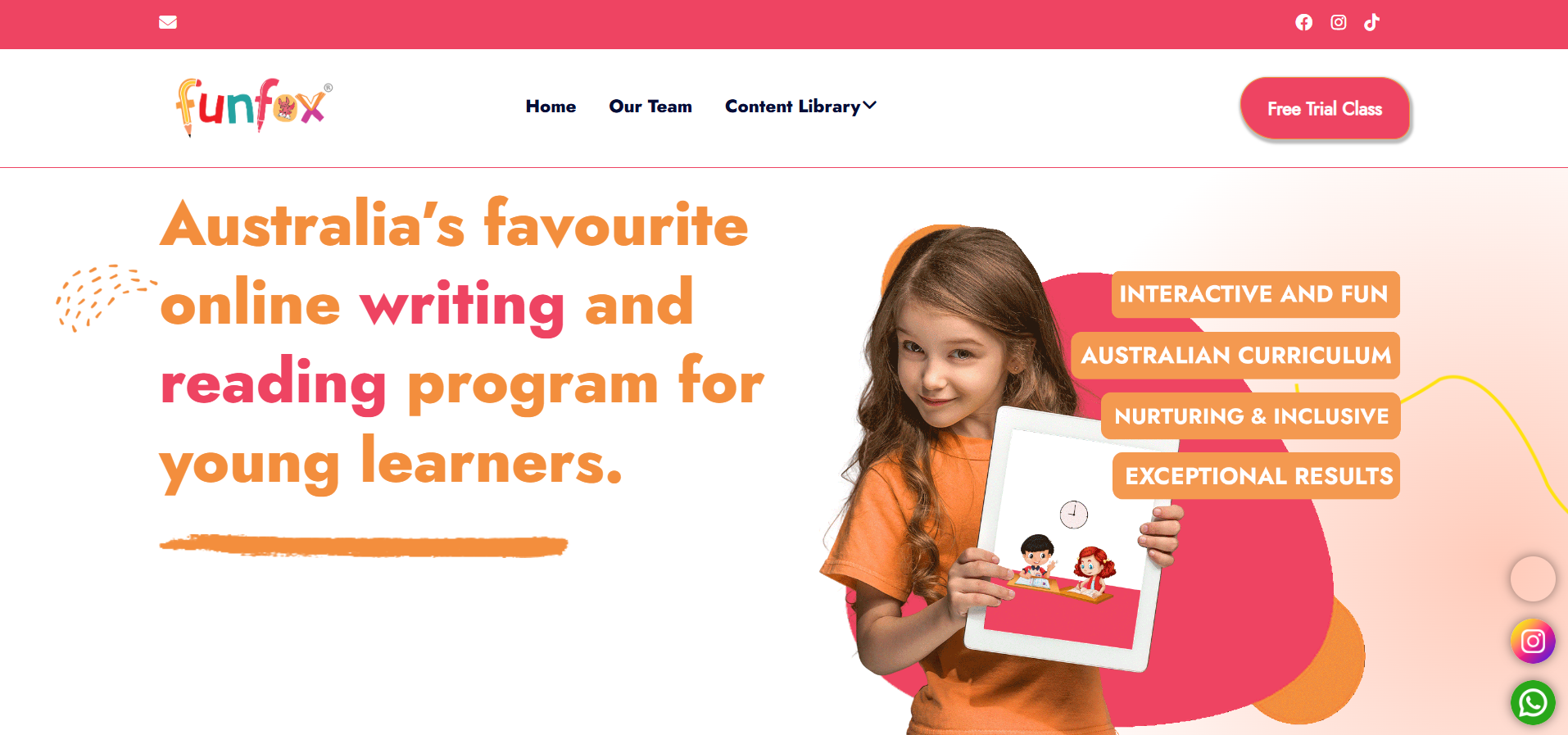
FunFox offers research-informed literacy support through small, interactive online classes. Sessions balance structure with creativity, helping children build strong foundations in reading and writing while still enjoying the learning process.
Key features:
-
Small-group sessions that allow for individual attention
-
Trained teachers who guide learning with warmth and clarity
-
Focus on fluency, confidence, and meaningful communication
-
Interactive lessons that keep children engaged and motivated
Best for: Families seeking a supportive, confidence-building online program for children aged 5–12 that strengthens both reading and writing skills.
2. MultiLit (Making Up Lost Time in Literacy)
MultiLit is widely used in Australian schools and intervention settings. It focuses on structured phonics instruction and regular practice for children who need additional literacy support.
Key features:
-
Systematic phonics taught in a clear sequence
-
Frequent revision to reinforce learning
-
Built-in progress monitoring to track growth
-
Targeted support for decoding and word recognition
Best for: Children who are reading below expected levels and benefit from explicit, structured intervention.
3. Sounds-Write
Sounds-Write teaches reading and spelling by starting with spoken sounds and showing children how those sounds map to letters. It emphasizes understanding how words work rather than memorizing them.
Key features:
-
Speech-to-print teaching approach
-
Strong focus on phonemic awareness and decoding
-
Clear structure that builds skills step by step
-
Encourages children to think about how words are constructed
Best for: Learners who benefit from strong foundational phonics instruction and logical skill progression.
4. Orton-Gillingham–Based Approaches
Orton-Gillingham is not a single program, but a family of structured approaches commonly used to support children with reading difficulties, including dyslexia.
Key features:
-
Multisensory teaching using sight, sound, and movement
-
Highly structured and sequential instruction
-
Frequent review to support memory and retention
-
Lessons adapted to each child’s individual needs
Best for: Children with persistent reading challenges or diagnosed learning differences who need tailored, intensive support.
5. Read Write Inc.
Read Write Inc. is a structured literacy program used in many schools worldwide. It combines phonics instruction with guided reading, vocabulary, and comprehension development.
Key features:
-
Systematic phonics taught alongside reading practice
-
Predictable lesson routines that support consistency
-
Emphasis on blending decoding with understanding
-
Supports both early readers and developing readers
Best for: Schools and families looking for a structured classroom-style program that links phonics with real reading experiences.
How to Tell If a Program Will Suit Your Child?

When you’re exploring literacy programs, it’s easy to get caught up in names, claims, and promises. Yet what matters most isn’t the label on the program, but how your child actually experiences it. A strong program should feel supportive, clear, and responsive to your child’s individual needs.
Rather than asking, “Is this the most popular program?”, it can help to ask, “Does this feel right for my child?” These signs can guide your decision:
-
Your child understands what they are being taught: Lessons should feel clear rather than confusing. Your child should be able to explain what they are learning in simple terms, even if they are still developing the skill.
-
Teaching focuses on building skills, not guessing: Look for instruction that shows children how sounds, words, and sentences work, instead of encouraging them to rely mainly on pictures or context.
-
Progress feels steady, even if it’s gradual: Growth doesn’t need to be fast, but you should see small changes over time, such as more accurate reading, greater confidence, or less resistance.
-
Your child feels supported, not pressured: Children learn best when they feel emotionally safe. A suitable program balances guidance with encouragement rather than constant correction.
-
There is room for adjustment if your child struggles: Good programs adapt. Teachers should be willing to slow down, revisit skills, or explain concepts differently when needed.
-
Your child is willing to return to sessions: You don’t need excitement every day, but ongoing avoidance or distress is a sign the approach may not be the right fit.
Also Read: Engaging Reading Fluency Games for Students
The Role of Teachers and Parents Together
Children make the strongest literacy progress when the adults around them work as a team. Teachers bring structured instruction and professional expertise, while parents provide emotional safety, daily encouragement, and meaningful language experiences at home.
Neither role needs to be perfect. What matters most is consistency, communication, and shared understanding of the child’s needs. When schools and families support each other, children feel more secure, motivated, and confident in their learning.
|
What Teachers Support |
What Parents Support |
|
Teach reading and writing skills in a structured sequence |
Create a calm, encouraging environment around literacy |
|
Provide explicit instruction in phonics, fluency, and comprehension |
Read aloud regularly and talk about stories and ideas |
|
Observe progress and identify learning gaps |
Notice emotional responses to reading and writing at home |
|
Offer feedback that guides skill development |
Offer praise that builds confidence and persistence |
|
Adjust instruction when a child feels stuck |
Advocate for the child when something doesn’t feel right |
|
Use assessment to guide next teaching steps |
Support routines like short daily reading or writing time
|
When children see that teachers and parents are both on their side, learning feels safer. That sense of trust often makes them more willing to try, even when tasks feel challenging.
How FunFox Readers Club Supports Literacy Through a Research-Informed Approach
Many parents feel unsure which reading support truly helps their child. FunFox Readers Club is built around research into how children learn to read, combining structure with encouragement so learning feels clear and achievable.
-
Focus on essential reading skills: Sessions support phonemic awareness, decoding, vocabulary, fluency, and comprehension.
-
Explicit teaching that removes guesswork: Children are shown how sounds and words work instead of being asked to rely on guessing.
-
Small-group classes for personalized support: Teachers can notice individual needs and adjust support quickly.
-
Guided practice with gentle feedback: Regular reading during sessions helps children build skills and confidence over time.
-
Supportive, calm learning environment: Children feel safe to try, make mistakes, and grow.
With FunFox, your child learns to read with confidence, purpose, and skill. You’ll start to see a change in your child, in how they read and how they feel about reading.
Final Thoughts
Supporting a child’s reading journey can feel overwhelming, especially when there is so much conflicting advice online. What makes the biggest difference is consistent, structured support that also protects your child’s confidence and love for learning. When children understand how reading works and feel safe to practise, progress becomes more visible and more sustainable.
FunFox Readers Club offers that balance of research-informed teaching, gentle guidance, and meaningful practice. With FunFox, your child learns to read with confidence, purpose, and skill. You’ll start to see a change in your child, in how they read and how they feel about reading.
Want to support your child’s reading with expert guidance in a calm, encouraging space? Explore FunFox Readers Club and see how small-group sessions can make reading feel clearer and more achievable. Enroll Now.
FAQs
1. What is the Science of Reading in simple terms?
The Science of Reading is a large body of research that explains how children learn to read. It shows that skills like phonics, phonemic awareness, vocabulary, fluency, and comprehension need to be taught clearly and in a structured way.
2. Why is the Science of Reading important for my child?
It supports children to understand how words work rather than guessing. This often leads to stronger decoding, better comprehension, and greater confidence, especially for children who find reading challenging.
3. Is phonics the same as the Science of Reading?
Phonics is an important part of the Science of Reading, but it is only one piece. The full approach also includes building vocabulary, fluency, oral language, and comprehension.
4. How do I know if my child needs extra reading support?
You might notice your child avoiding reading, struggling to sound out words, forgetting familiar words, or feeling frustrated during reading tasks. These can be signs that extra guidance could help.
5. Can the Science of Reading help children with dyslexia?
Yes. Structured, explicit teaching of sounds, letters, and word patterns is widely recognized as supportive for children with dyslexia and other learning differences.
6. What makes FunFox Readers Club different from general tutoring?
FunFox focuses on small-group learning, gentle guidance, and research-informed instruction. Sessions support both skill development and confidence, helping children feel safe to practise and grow.